
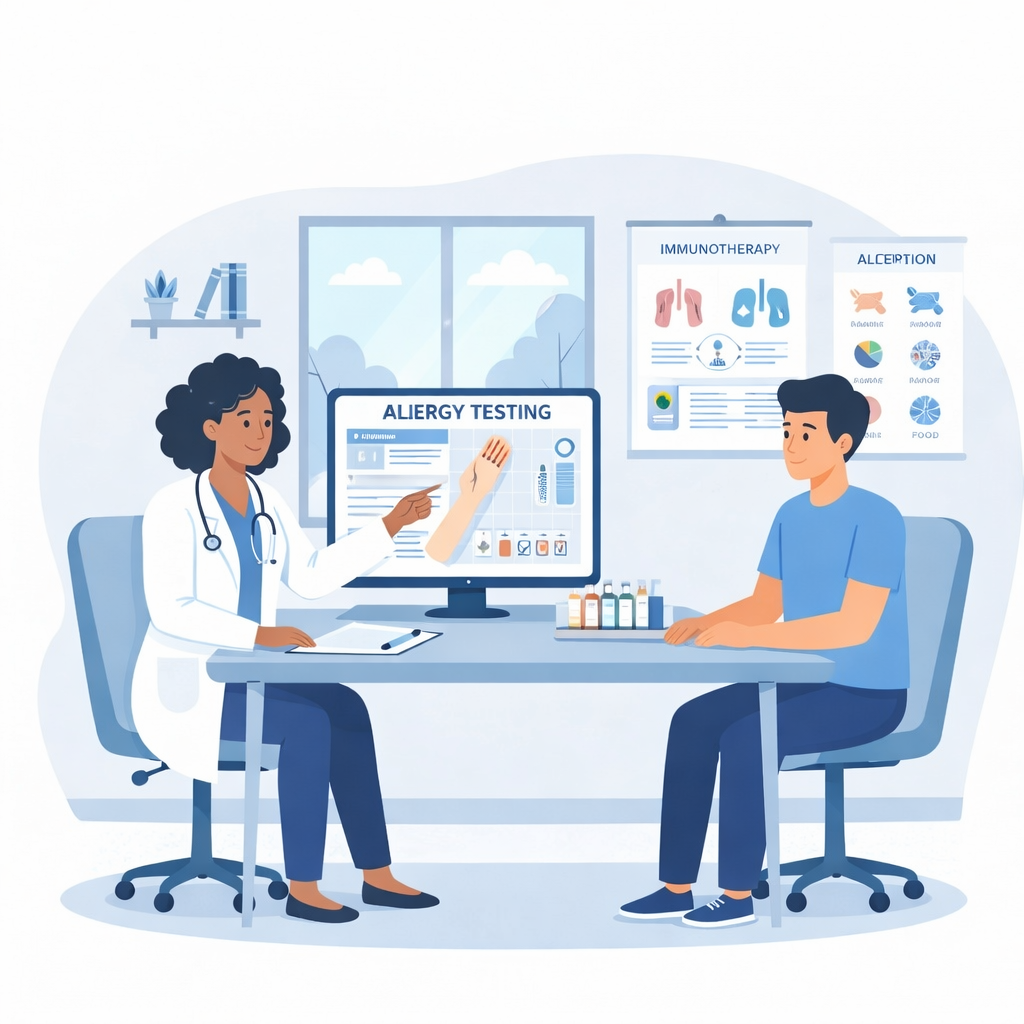
Allergy Testing & Immunotherapy
Allergy Testing & Immunotherapy helps accurately identify the substances that trigger allergic reactions and provides targeted treatment to reduce sensitivity over time. Using advanced skin prick testing and personalised immunotherapy plans, this service focuses on long-term symptom control rather than temporary relief.
What This Service Includes
- Detailed allergy history and symptom assessment
- Skin prick testing to identify common triggers
- Trigger analysis (dust, pollen, mold, pets, foods when required)
- Personalised immunotherapy plan (allergy shots or sublingual therapy)
- Medication guidance for symptom control
- Lifestyle and environmental modification advice
Why It Matters:
Allergy Testing & Immunotherapy helps identify the exact triggers behind recurring allergy symptoms. With accurate skin prick testing and personalised immunotherapy, patients receive targeted treatment that reduces sensitivity over time — providing long-term relief, fewer flare-ups, and improved daily comfort.
Do I need to stop medicines before allergy testing?
Some antihistamines may need to be stopped before skin prick testing for accurate results. Your doctor will guide you on which medicines to pause and when to restart them safely.
What happens during allergy testing?
Small amounts of common allergens such as dust, pollen, mold, and pet dander are placed on the skin using tiny pricks. The reaction helps identify triggers. Based on results, a personalised treatment and immunotherapy plan is created.
Who should consider immunotherapy?
Immunotherapy is recommended for patients with persistent or moderate-to-severe allergies that do not improve with routine medication. It helps train the immune system to respond differently, reducing symptoms and preventing long-term allergy progression.